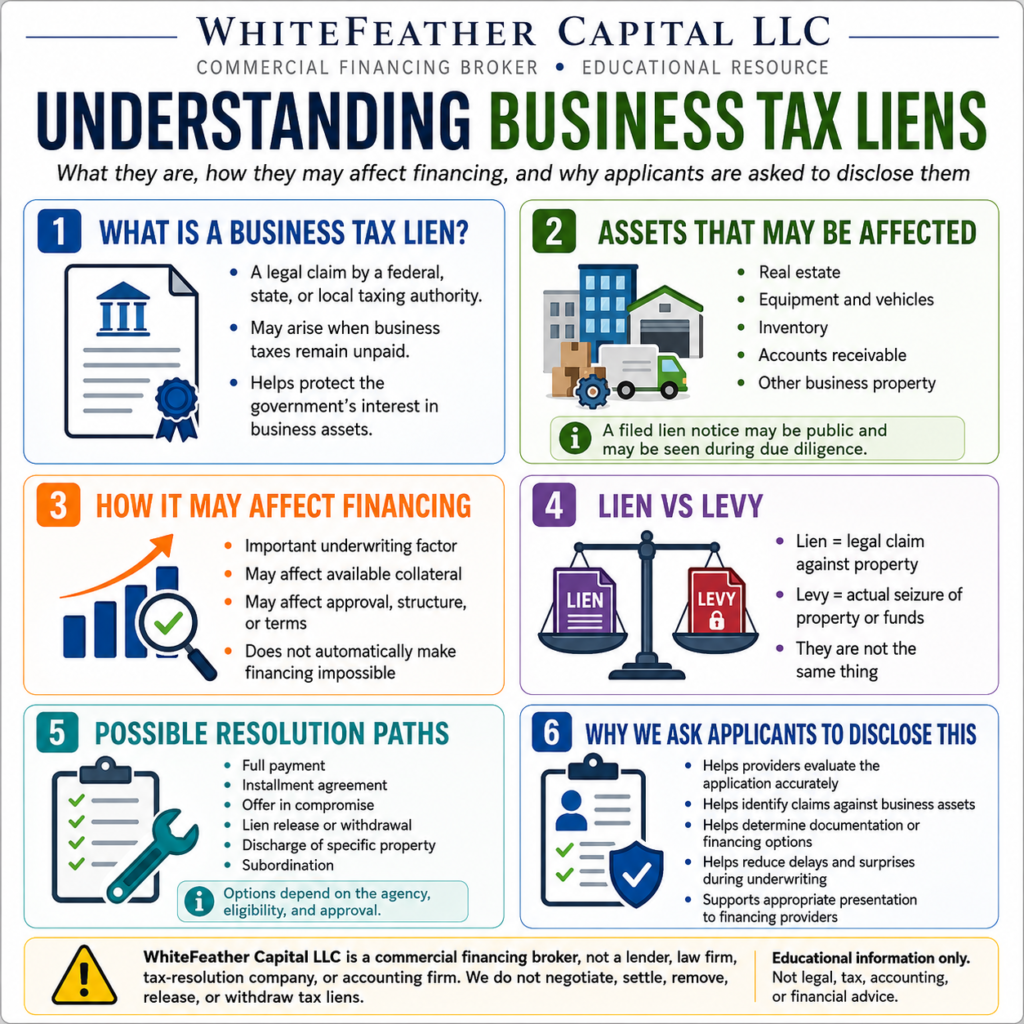
📌 A business tax lien is a legal claim that a federal, state, or local taxing authority may assert against a business’s property or rights to property when taxes remain unpaid. Its purpose is to protect the government’s interest in the business’s assets until the tax obligation is resolved or otherwise addressed under applicable law.
🏛️ Depending on the taxing authority and the circumstances, a lien may affect property such as real estate, equipment, vehicles, inventory, accounts receivable, and other business assets. In some cases, a filed lien notice may become part of the public record and may be discovered by creditors, vendors, or financing providers during due diligence.
💼 For business owners seeking financing, a tax lien can be an important underwriting factor, but it does not automatically mean financing is impossible. A financing provider may review the lien amount, payment status, available collateral, business cash flow, and overall risk profile before determining whether any financing options may be available.
⚖️ It is also important to understand that a lien is different from a levy. A lien is a legal claim against property, while a levy generally refers to an actual seizure of property or funds by the taxing authority.
🛠️ Resolution options vary depending on the agency involved and the facts of the case. Depending on eligibility and approval by the taxing authority, possible options may include full payment, an installment agreement, an offer in compromise, lien release, lien withdrawal, discharge of specific property, or subordination.
🔍 This resource is intended to help business owners better understand how tax liens work, how they may affect commercial financing, and what general types of resolution paths may exist. Understanding the issue early may help a business respond more effectively and reduce disruptions to operations or financing plans.
🤝 WhiteFeather Capital LLC is a commercial financing broker and is not a lender, law firm, tax-resolution company, or accounting firm. We do not negotiate, settle, remove, release, or withdraw tax liens. We may help eligible businesses explore commercial financing options through independent financing providers, subject to underwriting and approval requirements.
❗ This information is provided for general educational purposes only and should not be considered legal, tax, accounting, or financial advice. Business owners should consult a qualified tax professional, accountant, or attorney regarding their specific circumstances.
Why We Ask About Business Tax Liens
We ask applicants to disclose any business tax liens so financing providers can accurately evaluate the application, identify possible claims against business assets, and determine what documentation or financing options may be available. Providing complete and accurate information helps reduce delays, avoid unexpected issues during underwriting, and allows the application to be presented appropriately to potential financing providers.